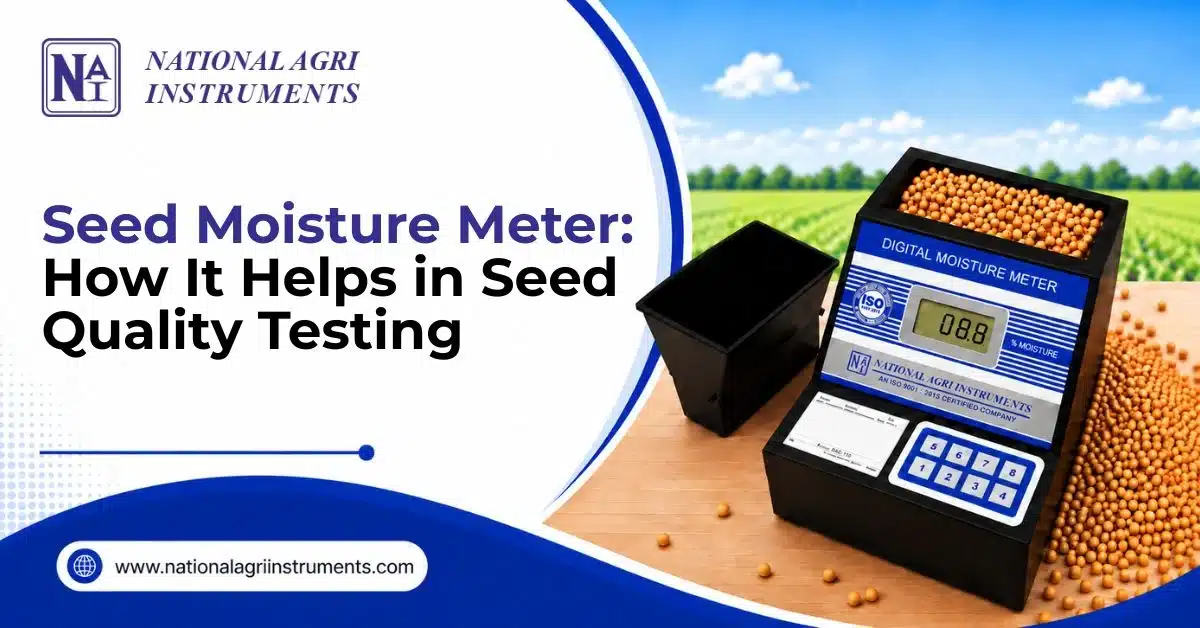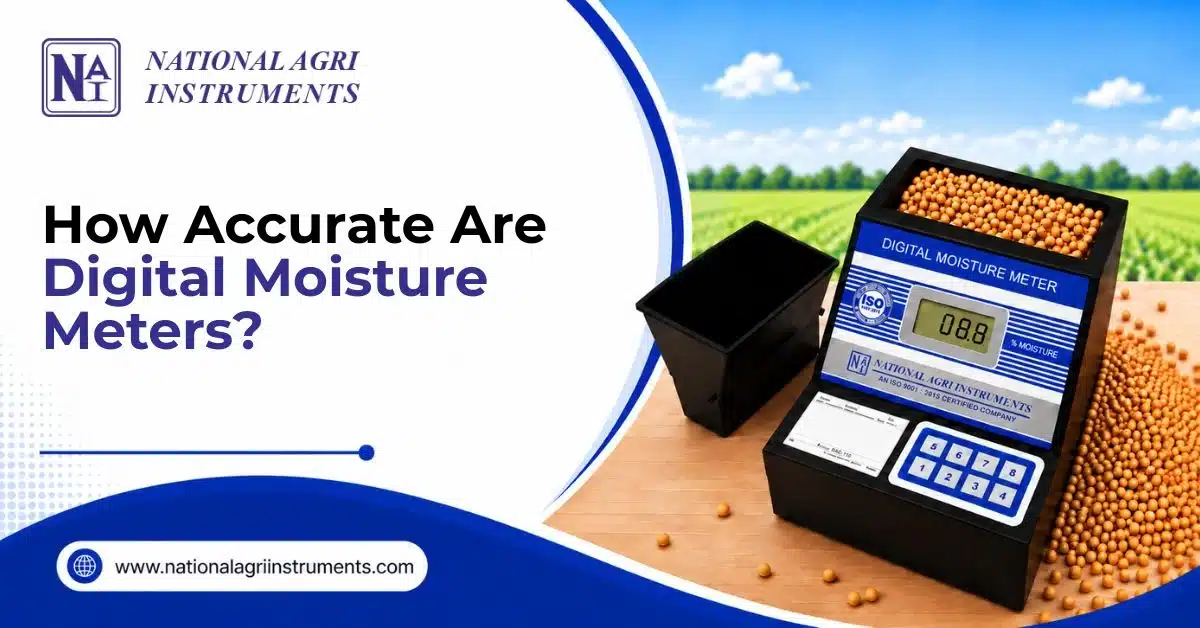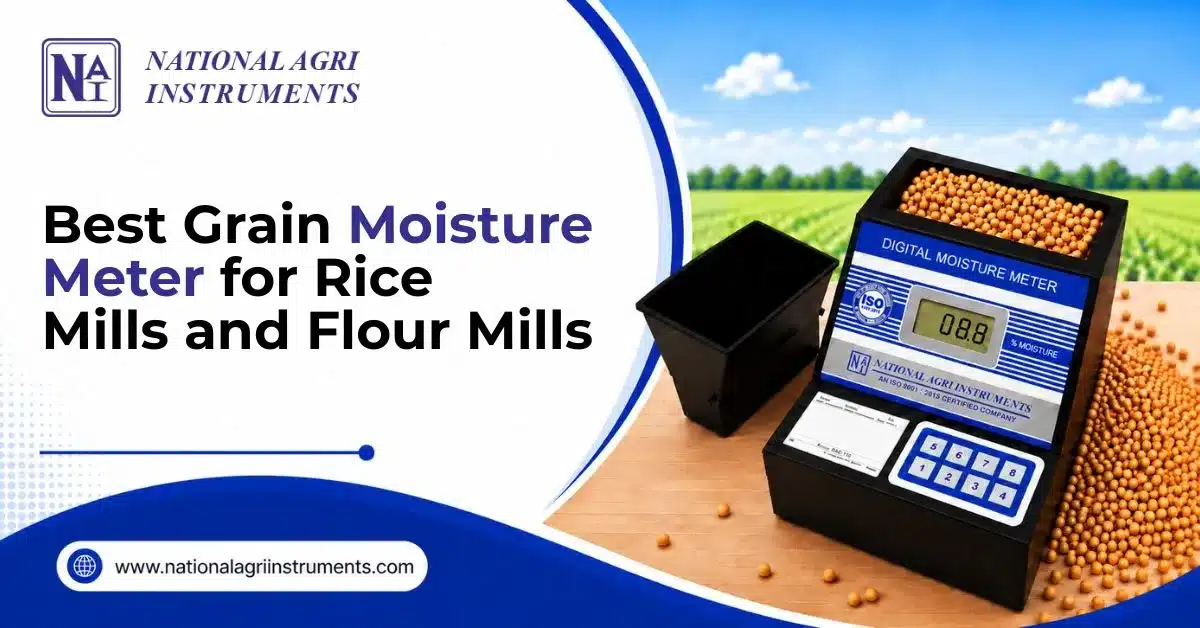
Seed quality testing involves evaluating different characteristics that can affect how seeds are handled, stored,…
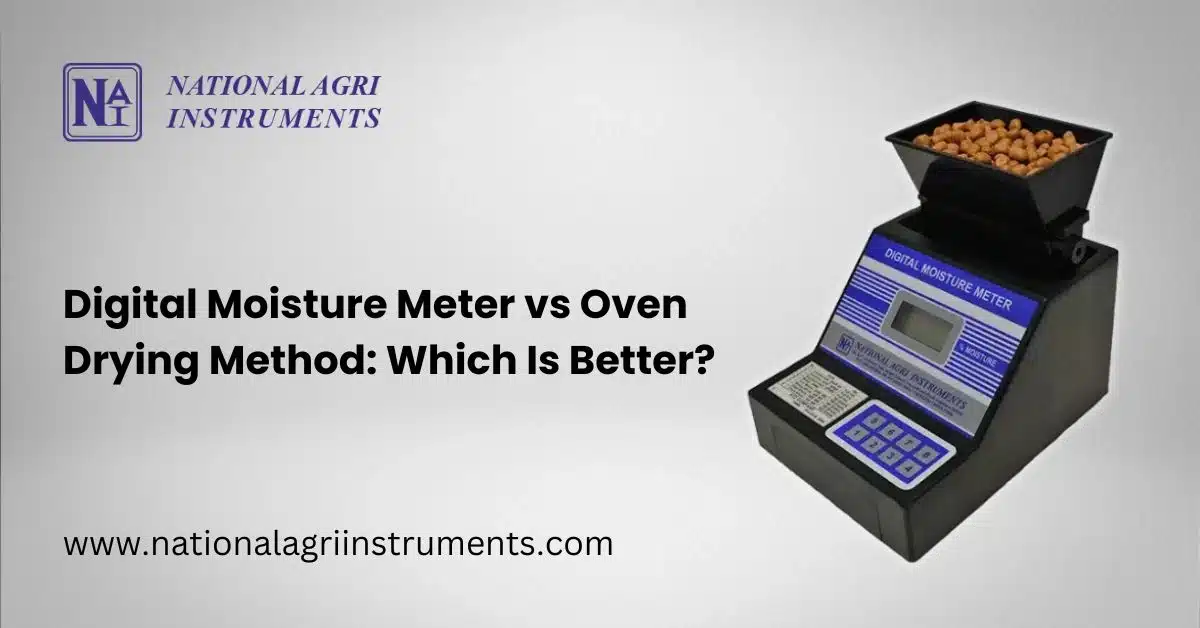
Digital Moisture Meter vs Oven Drying Method: Which Is Better?
Accurate moisture measurement plays a vital role in maintaining the quality, storage stability, and market value of agricultural commodities. Whether handling grains, pulses, oilseeds, spices, or seeds, understanding moisture content helps reduce spoilage, improve processing efficiency, and support better trading decisions. Selecting the right testing method is therefore essential for obtaining dependable results.
Among the commonly used moisture measurement techniques, the Digital Moisture Meter and the oven drying method are widely recognized for their respective advantages. While both are used to determine moisture content, they differ significantly in terms of testing speed, convenience, accuracy, and practical applications. Understanding these differences helps users choose the most suitable solution for their operational requirements.
Understanding the Two Moisture Testing Methods
Moisture testing methods are selected based on application requirements, testing frequency, and the level of accuracy needed. Some methods are designed for laboratory analysis, while others support rapid field testing.
A Digital Moisture Meter is an electronic instrument that quickly measures moisture content using advanced sensing technology, making it suitable for on-site and routine testing. In contrast, the oven drying method determines moisture by measuring the weight loss of a sample after controlled heating over a specified period.
Both methods have their own advantages depending on the intended use.
How the Oven Drying Method Works?
The oven drying method has long been used as a laboratory reference technique for determining moisture content. It involves carefully weighing a sample, heating it at a controlled temperature for a specified duration, and then weighing it again to calculate moisture loss.
Although a Digital Moisture Meter provides immediate readings, the oven drying method requires laboratory equipment, controlled conditions, and trained personnel to obtain accurate results.
This process is commonly adopted for research, laboratory testing, and quality verification where testing time is not a primary concern.
Why Digital Moisture Meters Are Preferred for Daily Testing?
Industries handling agricultural commodities often require fast and reliable moisture measurements throughout procurement, storage, and processing operations. Waiting several hours for laboratory results may affect productivity and operational decisions.
A Digital Moisture Meter allows users to obtain readings within minutes, making it suitable for routine testing in farms, warehouses, grain markets, rice mills, flour mills, and processing facilities.
Its portability, ease of operation, and quick measurement capability help users make timely decisions during day-to-day operations.
Digital Moisture Meter vs Oven Drying Method
| Comparison Factor | Digital Moisture Meter | Oven Drying Method |
| Testing Time | Approximately one minute per sample | Several hours |
| Portability | Portable and field-friendly | Laboratory based |
| Ease of Use | Simple operation | Requires trained personnel |
| Temperature Compensation | Available in many models | Manual laboratory process |
| Sample Damage | Non-destructive | Destructive testing |
| Best Application | Routine field and industrial testing | Laboratory analysis and reference testing |
The choice depends on operational requirements, testing frequency, and the working environment.
Accuracy and Reliability Comparison
Accuracy remains one of the most important considerations when selecting a moisture testing method. Reliable measurements help prevent storage losses, maintain product quality, and support better commercial decisions.
Modern Digital Moisture Meter models provide high accuracy through calibrated measurement systems and automatic temperature compensation, making them suitable for routine industrial and agricultural applications. The oven drying method is often considered a laboratory reference technique but requires significantly more time and controlled testing conditions.
Both methods deliver reliable results when used correctly for their intended applications.
Applications Across Different Industries
Different industries require moisture testing for different operational objectives. The selected method should match testing frequency, productivity requirements, and the working environment.
A Digital Moisture Meter is widely used in:
- Grain trading
- Rice mills
- Flour mills
- Agricultural procurement
- Seed processing
- Export inspection
- Food processing
- Warehouses
Laboratory environments may continue using oven drying methods for analytical verification, while routine operations generally require faster testing solutions.
Looking for a reliable Digital Moisture Meter for fast and accurate agricultural moisture testing? Contact Us for dependable moisture measurement solutions.
Factors to Consider Before Choosing a Moisture Testing Method
Choosing the appropriate moisture testing method depends on several operational and technical factors. Understanding these considerations helps businesses invest in the right solution.
Before selecting a Digital Moisture Meter or relying on laboratory testing, evaluate:
- Testing frequency
- Required turnaround time
- Commodity types
- Accuracy requirements
- Portability needs
- Available budget
- Ease of operation
- Maintenance requirements
Matching the testing method to operational requirements improves efficiency and decision-making.
Which Method Is Better for Agriculture?
Agricultural operations often involve testing multiple commodity samples every day during harvesting, procurement, storage, and transportation. Fast decision-making is essential to maintain product quality and reduce post-harvest losses.
For most agricultural applications, a Digital Moisture Meter offers greater convenience due to its quick testing capability, portability, and ability to support a wide range of commodities. The oven drying method remains valuable for laboratory validation and specialized analytical work where testing time is less critical.
Selecting the appropriate method depends on the balance between speed, practicality, and testing objectives.
Frequently Asked Questions
What is the difference between a Digital Moisture Meter and the oven drying method?
A Digital Moisture Meter provides fast electronic moisture readings, while the oven drying method measures moisture through controlled heating and weight loss in a laboratory.
Which method is more suitable for agricultural use?
For routine agricultural testing, Digital Moisture Meters are generally preferred because they provide quick, portable, and convenient moisture measurements.
Is the oven drying method more accurate?
The oven drying method is widely used as a laboratory reference method, while modern digital moisture meters provide highly reliable results for routine field and industrial applications.
Can a Digital Moisture Meter test different agricultural commodities?
Yes. Many digital moisture meters support calibration for grains, pulses, oilseeds, spices, seeds, and several other agricultural commodities.
Which method saves more time?
A Digital Moisture Meter significantly reduces testing time by providing results within minutes, whereas oven drying typically requires several hours.
Conclusion
Selecting the right moisture testing method depends on the application, testing environment, and operational priorities. Laboratory methods continue to provide valuable reference analysis, while modern testing technologies have transformed routine moisture measurement by offering greater speed and convenience.
For agriculture, grain trading, processing industries, and quality control applications, a Digital Moisture Meter provides an efficient solution that supports faster decision-making, reliable moisture assessment, and improved operational productivity. Understanding the strengths of both methods helps users choose the approach that best meets their testing requirements.
Related Posts