Moisture content is an important quality parameter in grain processing because it can influence how…
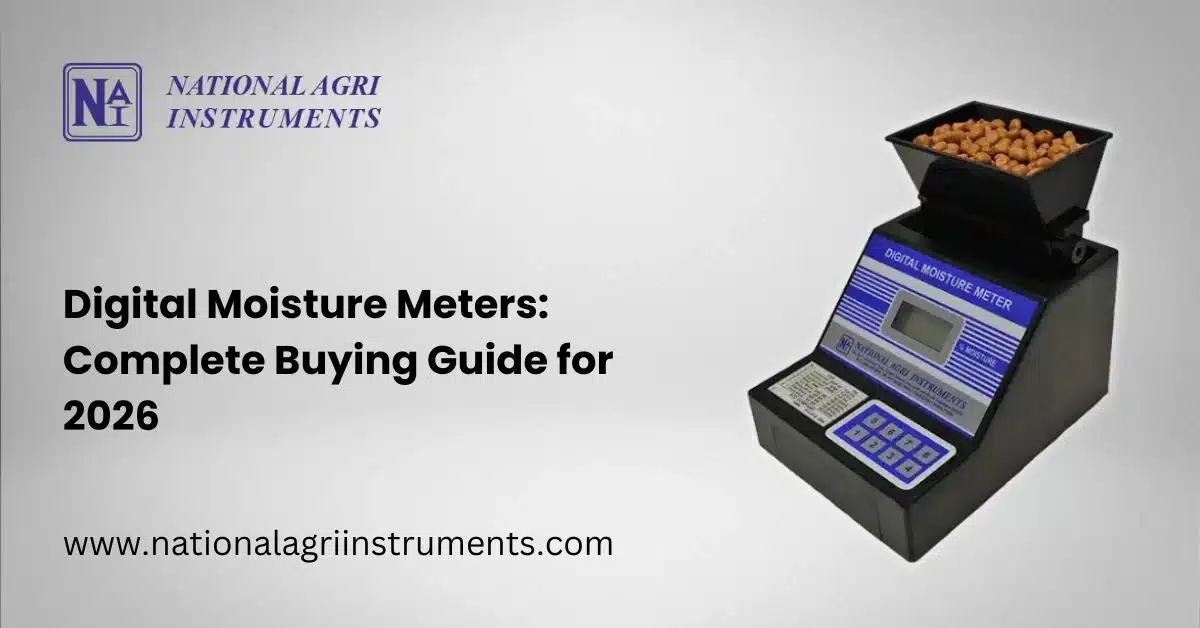
Digital Moisture Meter Complete Buying Guide for 2026
Accurate moisture measurement has become a critical requirement across agriculture, commodity trading, food processing, and storage industries. Moisture levels directly influence product quality, shelf life, market value, and storage safety. Even small variations in moisture content can lead to spoilage, weight loss, quality disputes, and financial losses.
As agricultural quality standards continue to evolve, selecting the right Digital Moisture Meter is no longer just a purchasing decision—it is an investment in accuracy, efficiency, and quality control. Understanding the key factors that influence performance can help buyers choose an instrument that delivers reliable results for years to come.
Making an informed decision starts with knowing what features truly matter.
Why Choosing the Right Moisture Meter Matters
Agricultural commodities are often bought, sold, processed, and stored based on their moisture content. Incorrect readings can result in rejected consignments, storage damage, reduced profitability, and quality concerns.
For businesses handling grains, oilseeds, pulses, spices, and processed agricultural products, a Digital Moisture Meter helps ensure accurate moisture assessment before critical decisions are made.
Benefits of accurate moisture testing include:
- Improved storage management
- Better product quality control
- Reduced spoilage risks
- Enhanced trading confidence
- Compliance with industry standards
The right instrument can contribute significantly to operational efficiency and profitability.
Check Commodity Calibration Before Buying
One of the most overlooked buying factors is commodity calibration compatibility. Different commodities have unique physical characteristics and moisture behaviors, making proper calibration essential for accurate readings.
Before purchasing a Digital Moisture Meter, buyers should verify whether the instrument supports the commodities they regularly handle.
Important commodity categories include:
- Grains
- Pulses
- Oilseeds
- Spices
- Vegetable seeds
- Animal feed
- Flour products
- Coffee products
Instruments calibrated for a wider range of commodities provide greater flexibility and long-term value.
Digital Moisture Meter Specifications to Compare Before Buying
When comparing moisture testing instruments, buyers should carefully review the technical specifications that influence accuracy, efficiency, and ease of operation. A Digital Moisture Meter with the right combination of performance and durability can deliver more reliable results across different agricultural applications.
Key specifications to evaluate include:
| Specification | Details |
| Measuring Range | 0.0% to 40.0% Moisture |
| Sensitivity | ±0.1% |
| Accuracy | ±0.2% |
| Display | 3½ LCD Display |
| Sample Size | Approximately 250 CC |
| Measurement Time | One Sample Per Minute |
| Weight | Less Than 1 Kilogram |
| Temperature Compensation | Automatic Inbuilt Compensation |
| Body Construction | Rugged ABS Molded Body |
| Maintenance | No Moving Parts, Maintenance-Free Operation |
These specifications directly affect testing performance in real-world conditions. Higher accuracy and sensitivity improve confidence in moisture readings, while automatic temperature compensation helps eliminate manual corrections. Fast testing capability allows users to evaluate more samples in less time, improving productivity during procurement and quality control activities.
Portability is equally important. A lightweight design powered by standard pencil cells enables convenient testing in farms, warehouses, grain markets, storage facilities, and processing units. Durable ABS construction and the absence of mechanical moving parts further enhance reliability, making the instrument suitable for long-term field and industrial use.
Accuracy and Sensitivity Should Be a Priority
When comparing moisture meters, accuracy and sensitivity are among the most important technical specifications to evaluate. Small measurement errors can lead to significant commercial and operational consequences.
A high-quality Digital Moisture Meter should offer reliable accuracy and consistent sensitivity to ensure dependable results across different testing conditions.
Important specifications to consider include:
- Measurement accuracy
- Reading consistency
- Sensitivity levels
- Repeatability
- Calibration reliability
Selecting an instrument with strong performance specifications improves confidence in testing outcomes.
Key Factors to Evaluate Before Buying
| Buying Factor | Why It Matters |
| Commodity Calibration | Supports multiple products |
| Accuracy & Sensitivity | Improves measurement reliability |
| Temperature Compensation | Reduces testing errors |
| Measuring Range | Covers diverse commodities |
| Testing Speed | Improves productivity |
| Build Quality | Enhances durability |
| Maintenance Requirements | Reduces long-term costs |
Evaluating these factors helps buyers make more informed purchasing decisions.
Importance of Automatic Temperature Compensation
Temperature can influence moisture readings and affect testing accuracy. Instruments that require manual temperature adjustments often increase testing complexity and the risk of human error.
Modern moisture testing equipment uses automatic correction systems, and a Digital Moisture Meter with built-in temperature compensation provides faster and more reliable results.
Advantages include:
- Reduced calculation errors
- Improved measurement consistency
- Faster testing process
- Simplified operation
- Better field performance
Automatic compensation improves convenience while enhancing overall measurement reliability.
Compare Measuring Range and Testing Speed
Different commodities may contain varying moisture levels, making measurement range an important buying consideration. A wider range allows users to test a broader variety of products using a single instrument.
When evaluating a Digital Moisture Meter, buyers should review both measuring range and testing speed to ensure compatibility with their operational requirements.
Important considerations include:
- Moisture range coverage
- Reading stabilization time
- Sample capacity
- Testing frequency
- Workflow efficiency
Faster testing can significantly improve productivity in high-volume environments.
Looking for a reliable Digital Moisture Meter? Contact us today for accurate and dependable moisture testing solutions.
Choose a Durable and Maintenance-Free Design
Agricultural testing instruments are frequently used in warehouses, farms, procurement centers, mills, and field locations. Equipment durability directly affects long-term reliability and ownership costs.
A well-designed Digital Moisture Meter should feature a rugged construction capable of handling demanding operating conditions.
Look for features such as:
- Strong molded body
- Portable design
- Minimal maintenance requirements
- Long service life
- Reliable field performance
Durable equipment helps reduce downtime and replacement costs.
Common Mistakes Buyers Make
Many buyers focus only on price while overlooking important technical and operational considerations. This can result in inaccurate testing, limited functionality, and reduced long-term value.
Before purchasing a Digital Moisture Meter, avoid these common mistakes:
- Ignoring calibration availability
- Overlooking accuracy specifications
- Choosing limited measurement ranges
- Neglecting temperature compensation
- Focusing only on initial cost
- Ignoring durability and maintenance needs
A careful evaluation process helps ensure a more suitable investment.
Who Should Invest in a Digital Moisture Meter?
Moisture testing is important across a wide range of agricultural and industrial sectors. Accurate measurements support quality control, inventory management, and operational efficiency.
Industries that benefit from a Digital Moisture Meter include:
- Farmers
- Grain traders
- Rice mills
- Flour mills
- Oil industries
- Export surveyors
- Government organizations
- Testing laboratories
- Feed manufacturers
- Commodity brokers
Reliable moisture measurement supports better decision-making throughout the supply chain.
Frequently Asked Questions
What should I check before buying a Digital Moisture Meter?
You should evaluate commodity calibration options, accuracy, sensitivity, temperature compensation, measuring range, testing speed, and build quality.
Why is commodity calibration important?
Different commodities require different calibration settings to ensure accurate moisture measurement and reliable results.
What level of accuracy is ideal in a moisture meter?
Higher accuracy improves confidence in moisture readings and helps reduce quality and storage-related risks.
Is automatic temperature compensation necessary?
Yes. It helps eliminate manual corrections and improves testing consistency under varying environmental conditions.
Can one moisture meter test multiple commodities?
Yes. Many advanced instruments support calibration for grains, pulses, oilseeds, spices, feed products, and other agricultural commodities.
Conclusion
Selecting the right moisture testing instrument requires careful evaluation of performance, reliability, and application compatibility. Buyers should consider factors such as calibration options, accuracy, measuring range, testing speed, temperature compensation, and durability before making a decision.
From agricultural commodities and food processing applications to trading and storage operations, a Digital Moisture Meter plays a vital role in maintaining quality control and reducing operational risks. As industry requirements continue to evolve in 2026, investing in a well-designed and reliable moisture testing solution can provide long-term value and consistent performance.
Related Posts