Moisture content plays an important role in maintaining the quality, shelf life, and market value…
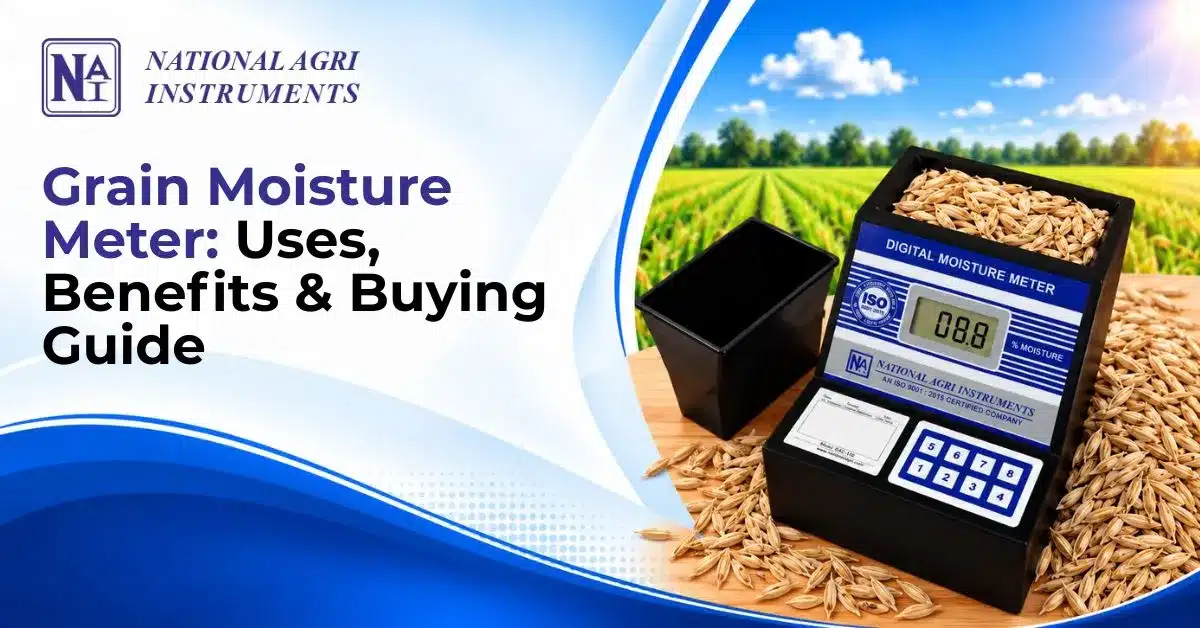
Grain Moisture Meter: Uses, Benefits & Buying Guide
Moisture content plays a vital role in grain quality, storage safety, and market value. Excess moisture can encourage mould growth, spoilage, and deterioration, while unsuitable moisture levels can affect grain handling and processing. Regular testing helps farmers, traders, rice mills, and grain storage operators make informed decisions about drying, storage, and quality control.
A reliable Moisture Meter helps assess grain moisture levels quickly, supporting consistent testing and better post-harvest management.
What Is a Grain Moisture Meter?
A grain Moisture Meter is a testing instrument used to measure the moisture present in grains such as rice, wheat, maize, and other agricultural produce. It helps users determine whether grains require additional drying before storage, transportation, or processing.
Depending on the instrument, readings may be obtained through electrical properties or other measurement methods. Selecting a suitable device depends on the grain type, required accuracy, and testing frequency.
Common Uses of a Grain Moisture Meter
Grain Quality Assessment
Farmers and grain traders use a Moisture Meter to check moisture levels when evaluating harvested produce or purchasing grain. Consistent measurements help identify batches that may need further attention.
Storage and Warehouse Management
Before storing grain, moisture testing helps operators assess whether the produce is suitable for the intended storage conditions. Periodic checks can also help identify moisture-related concerns during storage.
Rice and Flour Mills
Rice mills and flour mills use a Moisture Meter to test incoming grain and support quality control and processing decisions. Regular measurements help staff compare batches and maintain consistent handling practices.
Trading and Transportation
Wholesalers, brokers, and exporters use a Moisture Meter to check grain during inspection and dispatch. Testing supports informed handling decisions and helps reduce disputes related to grain quality.
Need reliable grain moisture testing equipment? Contact us to discuss your testing requirements.
Benefits of Using a Moisture Meter for Grain
- Better storage decisions: Helps identify grain that may need additional drying before storage.
- Improved quality control: Supports consistent moisture assessment across different batches.
- Reduced spoilage risks: Helps detect moisture conditions that may contribute to deterioration.
- More informed purchasing: Provides useful measurements when evaluating grain quality.
- Efficient testing: Enables routine checks without relying solely on visual inspection.
Moisture readings from a Moisture Meter should be evaluated alongside grain type, storage temperature, ventilation, and other relevant conditions to support proper grain handling and storage.
How to Choose the Right Grain Moisture Meter?
Consider these factors before purchasing a Moisture Meter for grain testing:
- Measurement range: Choose a range suitable for the grain types and moisture levels you regularly test.
- Accuracy and sensitivity: Check the stated specifications to ensure the instrument meets your testing requirements.
- Ease of operation: A clear display and straightforward controls can simplify routine testing.
- Testing speed: Faster readings can be helpful for mills, warehouses, and trading operations that test multiple batches.
- Portability and durability: Consider the working environment and whether the instrument needs to be moved frequently.
- Temperature compensation: This feature can help account for temperature variations during measurement.
The right choice depends on your daily testing volume, grain varieties, and quality-control requirements.
Frequently Asked Questions
What is a grain moisture meter used for?
It measures the moisture content of grains to support quality assessment, drying decisions, storage management, and processing.
Why is grain moisture testing important before storage?
Testing helps identify grain that may require additional drying, reducing the risk of moisture-related deterioration during storage.
Which grains can be tested using a moisture meter?
Suitable instruments may measure moisture in rice, wheat, maize, and other grains, depending on the model and its supported applications.
What should I consider when buying a grain moisture meter?
Check the measurement range, accuracy, sensitivity, ease of use, testing speed, durability, and suitability for your grain types.
How often should grain moisture be checked?
Test grain during harvesting, receiving, drying, and before storage. Further checks may be needed during storage or whenever conditions change.
Conclusion
Regular grain moisture testing helps maintain product quality, improve storage decisions, and support efficient agricultural operations. Choosing a suitable Moisture Meter based on measurement requirements, accuracy, and ease of use can make routine grain assessment more consistent and reliable.
Related Posts