Grain storage requires careful moisture monitoring to help preserve quality and reduce the risk of…
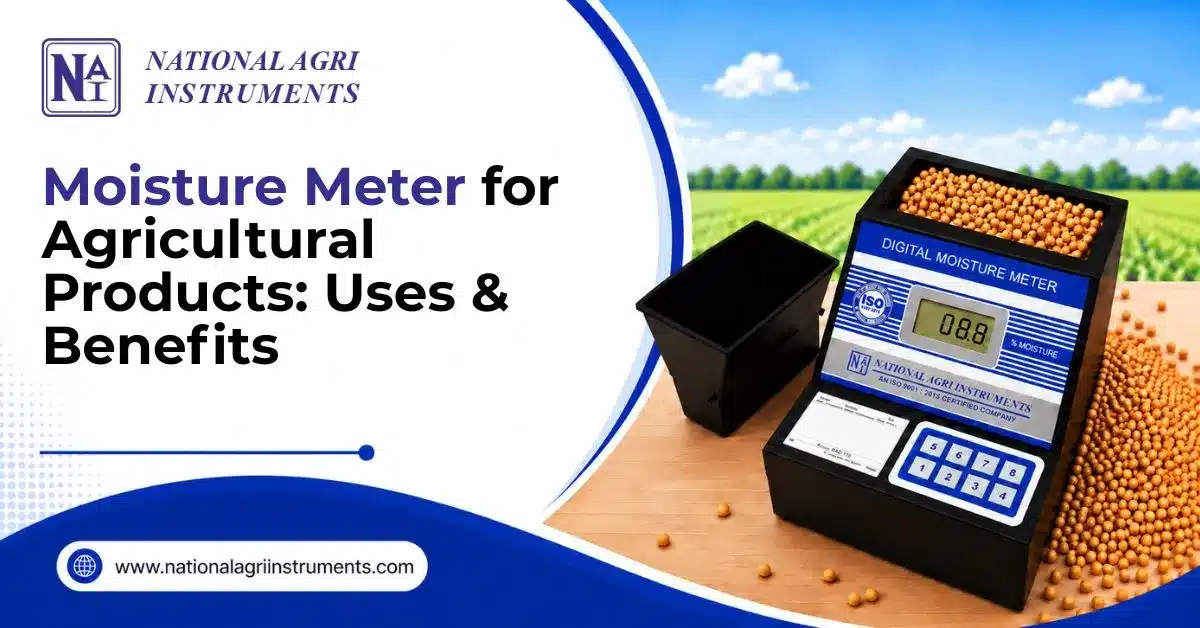
Moisture Meter for Agricultural Products: Uses & Benefits
Moisture content plays an important role in maintaining the quality, shelf life, and market value of agricultural products. Grains, seeds, and other farm produce can deteriorate when stored at unsuitable moisture levels, potentially leading to mould growth, quality loss, and unnecessary wastage. Regular moisture testing helps farmers, traders, mill operators, and storage facilities make informed decisions about drying, handling, and storage.
A reliable Moisture Meter helps measure moisture content so agricultural businesses can assess produce more consistently. Understanding its uses and benefits makes it easier to incorporate moisture testing into everyday agricultural operations.
Why Is Moisture Testing Important for Agricultural Products?
Agricultural products are exposed to changing weather, harvesting conditions, and storage environments. Excess moisture can increase the risk of spoilage, while moisture levels that do not meet processing or storage requirements may affect product quality.
Using a Moisture Meter helps operators check moisture levels rather than relying on appearance or touch alone. Regular measurements can support decisions about drying, storage readiness, and quality control throughout the supply chain.
What Are the Main Uses of a Moisture Meter in Agriculture?
Moisture testing is useful at several stages, from harvesting to storage and processing. Common applications include:
- Grain testing: Checking moisture in rice, wheat, and other grains before storage or milling
- Seed quality checks: Assessing seed moisture to support suitable handling and storage practices
- Warehouse inspections: Monitoring stored agricultural produce for changes that may require attention
- Buying and selling: Helping traders assess produce against moisture requirements agreed with buyers
- Processing preparation: Checking moisture before agricultural products move into processing operations
A suitable Moisture Meter helps make these checks more systematic, particularly where regular testing is part of daily operations.
Need reliable agricultural moisture testing? Contact us to discuss your Moisture Meter requirements.
What Are the Benefits of Using a Moisture Meter?
Better Storage Management
Excess moisture can increase the risk of mould and deterioration during storage. Routine testing with a Moisture Meter helps operators identify produce that may require further drying or closer monitoring. Readings should be considered alongside temperature, ventilation, and other storage conditions.
Improved Quality Control
Moisture levels can influence the quality and suitability of agricultural products for different purposes. Using a Moisture Meter during receiving and inspection helps businesses assess batches more consistently and identify potential issues before processing or dispatch.
Reduced Avoidable Losses
Detecting unsuitable moisture levels early can help businesses take corrective action before deterioration becomes more serious. Although moisture testing cannot eliminate every cause of spoilage, it can support better handling decisions and reduce preventable losses.
More Consistent Testing
A defined testing routine using a Moisture Meter helps staff compare readings across batches and over time. This makes moisture assessment less dependent on visual judgement and supports more consistent quality-control practices.
How Do You Choose the Right Moisture Meter for Agricultural Products?
The right instrument depends on the products you test and how frequently you need readings. Before purchasing, consider:
- Measuring range: Confirm that it suits the moisture levels relevant to your application.
- Accuracy and sensitivity: Review the specifications against your testing requirements.
- Temperature compensation: Automatic compensation can help account for temperature variations.
- Sample size and speed: Consider how much material is required and how quickly readings become available.
- Ease of operation: A clear display and straightforward process can simplify routine checks.
A Moisture Meter should be compatible with the specific agricultural material you intend to test. Comparing these features with your daily requirements can help you select a practical instrument without paying for unnecessary capabilities.
Frequently Asked Questions
What is a moisture meter used for in agriculture?
It measures moisture content in suitable agricultural materials, helping users assess quality and make informed drying, handling, and storage decisions.
Which agricultural products can be tested?
Depending on the instrument, applications may include grains, seeds, and other supported agricultural products. Always check material compatibility before testing.
How does moisture testing help prevent storage losses?
It helps identify moisture levels that may require drying or closer monitoring, reducing the risk of preventable moisture-related deterioration.
When should agricultural products be tested for moisture?
Testing may be useful after harvesting, during receiving, before storage, during inspections, and before processing or dispatch.
What should I consider when buying a moisture meter?
Compare measuring range, accuracy, sensitivity, temperature compensation, sample requirements, and ease of use for your specific application.
Conclusion
Maintaining suitable moisture levels is important for preserving agricultural product quality, supporting proper storage, and reducing avoidable losses. Regular testing helps farmers, traders, and processors identify moisture-related concerns and make informed decisions about drying, handling, and storage. Choosing a Moisture Meter that meets specific testing requirements can improve the consistency of quality checks and support better agricultural product management.
Related Posts