Seed quality testing involves evaluating different characteristics that can affect how seeds are handled, stored,…
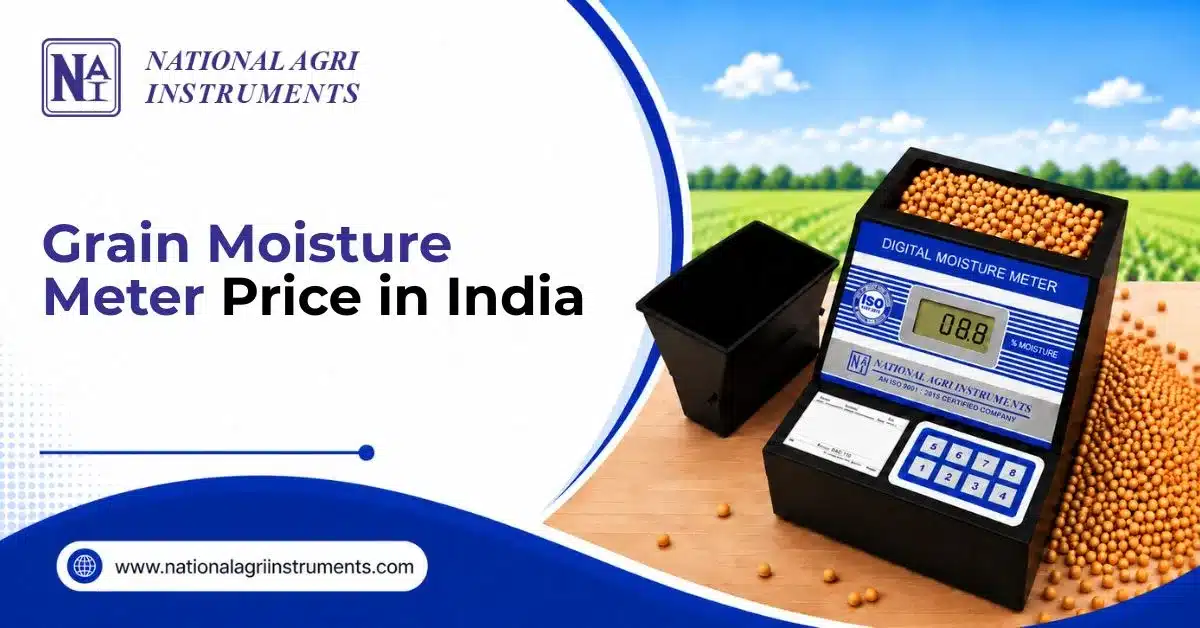
Grain Moisture Meter Price in India
The price of grain moisture testing equipment depends on measurement accuracy, testing requirements, construction, and ease of operation. For rice mills, flour mills, grain traders, and agricultural businesses, choosing the right instrument means balancing cost with reliable moisture readings.
Before comparing the Moisture Meter price in India, buyers should understand which features are essential for their daily operations. A suitable instrument can help assess grain moisture consistently, support storage decisions, and reduce the risk of handling grain at unsuitable moisture levels.
What Is the Price of a Grain Moisture Meter in India?
The price varies according to the instrument’s specifications, measurement range, testing method, and intended application. Basic instruments may suit routine checks, while specialised equipment can cost more depending on its capabilities.
In India, National Agri Instruments offers a Moisture Meter in the approximate price range of ₹3,500–₹5,000. Before purchasing, buyers should compare essential features and confirm the current price and included specifications with the supplier.
Which Factors Affect Moisture Meter Price?
The price of a grain-testing instrument depends on its measurement accuracy, moisture range, temperature compensation, and ease of operation. When comparing a Moisture Meter, buyers should focus on features that match their grain-testing needs rather than choosing based on price alone. Sample handling, display readability, construction quality, and maintenance requirements can also influence its overall value. Evaluating these factors helps rice mills, flour mills, and grain traders select equipment that supports routine testing without paying for unnecessary features.
1. Measurement Accuracy and Sensitivity
Accuracy matters when grain moisture readings inform buying, drying, or storage decisions. Compare the stated accuracy and sensitivity rather than choosing equipment based on price alone. A Moisture Meter should provide readings suitable for the level of precision your operation requires.
2. Measuring Range
Different applications may require different moisture ranges. Check whether the instrument covers the moisture levels commonly encountered in the grains you test. A suitable range helps prevent purchasing equipment that does not meet your routine testing needs.
3. Temperature Compensation
Temperature differences can influence moisture readings. Automatic temperature compensation can make routine testing more convenient by accounting for temperature variations during measurement.
4. Ease of Use and Maintenance
A simple operating process, clear display, durable body, and minimal moving parts can make an instrument practical for frequent use. Consider the time required to test samples and whether routine maintenance could interrupt work.
Looking for a reliable grain-testing solution? Contact us to explore our Moisture Meter and find the right fit for your testing needs.
How Should You Choose the Right Moisture Meter?
Start by identifying the grain types you test, how frequently you take readings, and how precise those readings need to be. A Moisture Meter for regular mill operations should be easy to handle and provide consistent results without adding unnecessary complexity.
Before purchasing, compare:
- Measuring range and stated accuracy
- Sample size and testing speed
- Temperature compensation
- Display readability and operating convenience
- Price, durability, and maintenance requirements
Is a Higher-Priced Moisture Meter Always Better?
Not necessarily. A more expensive instrument may include features your business rarely uses, while a simpler model may meet your daily requirements effectively. The best choice depends on your testing volume, operating conditions, and required measurement precision.
For routine grain testing, evaluate the complete value of a Moisture Meter, including ease of use and long-term reliability, rather than focusing only on the initial purchase price.
Frequently Asked Questions
What is the price of a grain moisture meter in India?
The price depends on the instrument’s features and specifications. National Agri Instruments offers a solution in the approximate range of ₹3,500–₹5,000; confirm the current price with the supplier.
Which features should I check before buying a moisture meter?
Check accuracy, sensitivity, measuring range, temperature compensation, sample size, testing speed, and ease of operation.
Why is accuracy important in grain moisture testing?
Accurate readings help businesses assess grain moisture more reliably and make informed decisions about handling, drying, and storage.
Does temperature affect grain moisture readings?
Temperature variations can influence measurements. Automatic temperature compensation can help account for these variations during testing.
Is a moisture meter useful for rice and flour mills?
Yes, Regular moisture testing helps mills evaluate incoming grain and monitor moisture levels during routine quality checks.
Conclusion
When comparing grain moisture meter prices in India, consider accuracy, measuring range, temperature compensation, and daily usability alongside cost. Choosing the right Moisture Meter for your testing requirements can support consistent grain quality assessment and informed storage decisions.
Related Posts