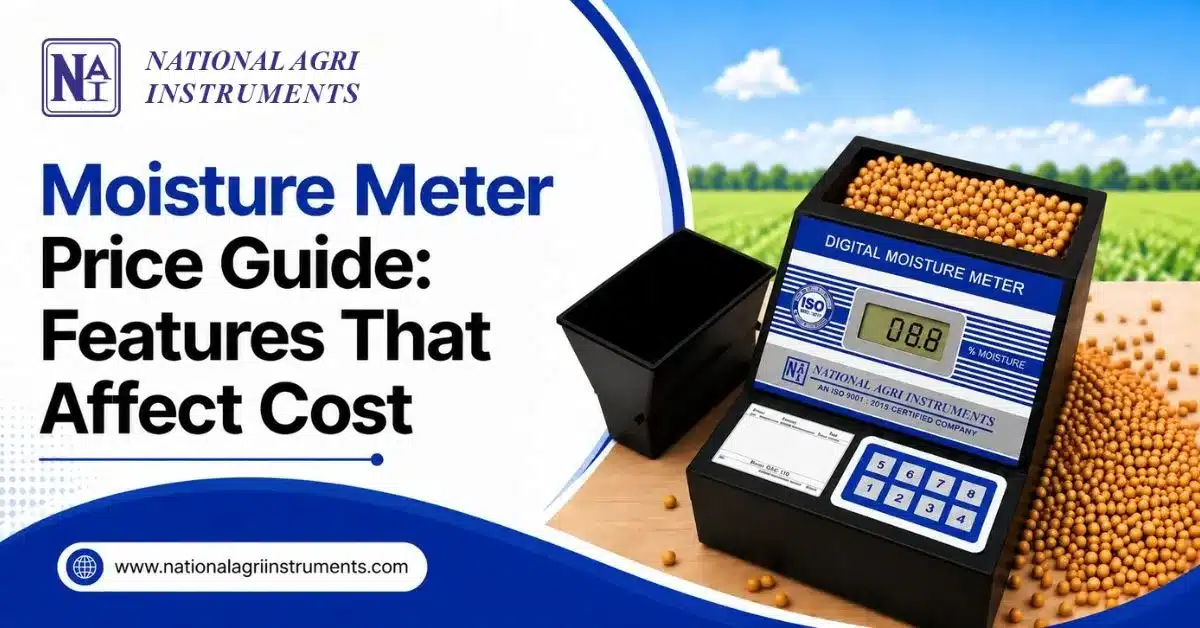
Moisture testing is used for different reasons across industries. In grain processing, it can support…
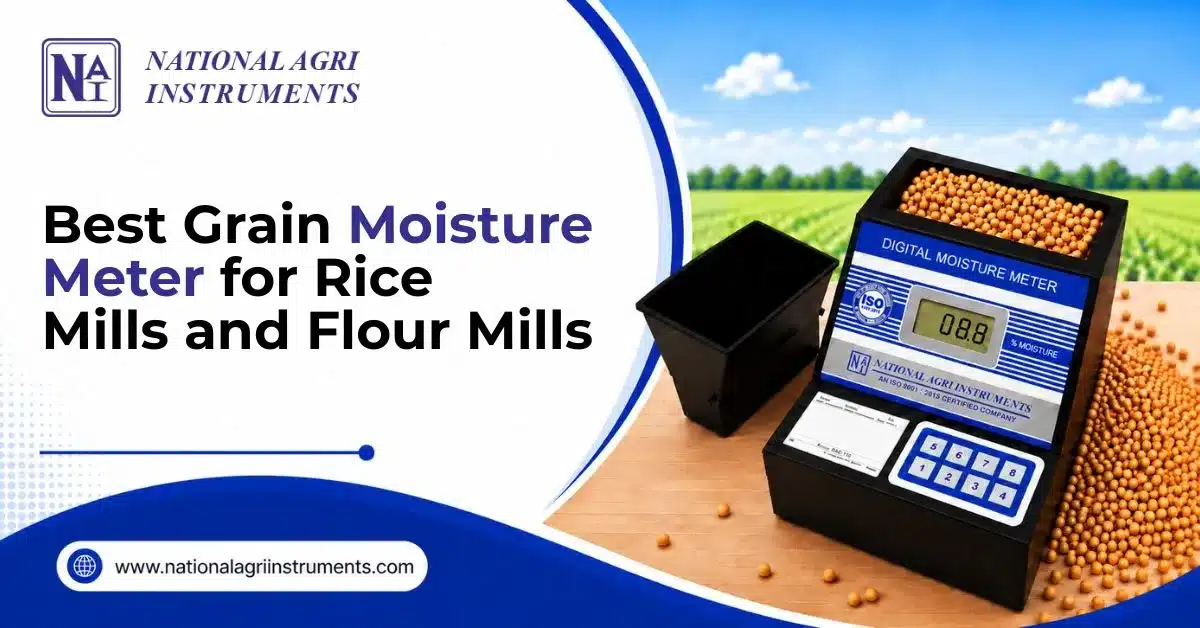
Best Grain Moisture Meter for Rice Mills and Flour Mills
Moisture content is an important quality parameter in grain processing because it can influence how raw materials are handled, stored, and evaluated. Rice mills and flour mills regularly deal with different batches of grain, making consistent moisture checking part of routine quality control. Selecting the right Moisture Meter therefore depends on how samples are tested, how often measurements are required, and what the mill needs from the testing process.
Why Do Rice Mills Need Moisture Testing?
Rice mills work with grain at different stages of handling and processing, so regular moisture checks can support consistent sample evaluation. When testing is performed repeatedly, operators need an instrument that is practical to use and capable of producing readings without making the process unnecessarily complicated.
For rice mill moisture testing, factors such as measurement range, testing speed, sample handling, and ease of operation become especially relevant. A suitable Moisture Meter can help operators perform routine checks efficiently while keeping the testing process straightforward.
How Does Moisture Testing Help Flour Mills?
Flour mills also work with grain where moisture content can be relevant to routine sample evaluation and processing decisions. Since testing may need to be performed repeatedly, the equipment should fit naturally into the mill’s quality-control workflow.
An appropriate Moisture Meter can support regular sample testing while avoiding unnecessary complexity. Factors such as sample quantity, measurement speed, ease of operation, and the ability to work under routine production conditions can be important when selecting equipment for a flour mill.
Need reliable grain moisture testing? Contact us for a Moisture Meter suited to your mill.
What Features Should You Look for in a Grain Moisture Meter?
The best grain-testing instrument depends on the actual requirements of the mill. Instead of looking for the highest number of features, buyers should first consider the materials being tested, expected moisture levels, testing frequency, and operating environment.
A good grain Moisture Meter should offer an appropriate measuring range, dependable accuracy, practical sample handling, and simple operation. NAI’s model provides a 00.0% to 40.0% moisture measuring range, ±0.2% accuracy, and ±0.1% sensitivity, giving users clear performance criteria to compare with their testing needs.
Is Automatic Temperature Compensation Useful?
Temperature conditions can vary during routine testing, particularly when samples are evaluated in different working environments. This can make temperature compensation an important practical feature for users who want a straightforward testing process.
The NAI Moisture Meter includes automatic inbuilt temperature compensation, reducing the need for manual calculations or reference charts during measurement. This can simplify routine sample evaluation for operators working with grain in mills and other testing environments.
What Makes a Moisture Meter Practical for Mills?
A grain-testing instrument needs to be convenient as well as technically suitable. Operators may perform measurements throughout the working day, so a clear display, simple controls, and easy sample handling can make a difference to everyday use. A Moisture Meter that fits smoothly into this routine can make regular grain evaluation more practical.
The NAI instrument features a 3½-digit LCD, ABS molded construction, and no mechanical moving parts. It also uses four pencil cells and provides a battery indication when the cells are weak. Its non-destructive testing method allows grain samples to be evaluated without damaging them.
How Should Rice and Flour Mills Choose?
Before purchasing, compare the instrument with your actual workflow. Consider the type of grain being tested, expected moisture levels, testing frequency, sample quantity, operating conditions, and the level of measurement performance required.
For rice mills and flour mills, a Moisture Meter should ultimately be selected for how well it fits routine quality evaluation rather than simply its price or the number of features it offers.
Is the Most Expensive Grain Moisture Meter the Best?
Not necessarily. Price alone does not determine whether an instrument is appropriate for a rice mill or flour mill. A more useful comparison looks at whether the equipment matches the actual testing requirements and can be integrated easily into the existing workflow.
A Moisture Meter that provides the required measurement capability, convenient operation, and suitable testing performance may be a more practical choice than an instrument with features that the mill does not need.
Frequently Asked Question
What should rice mills consider when choosing a Moisture Meter?
Rice mills should consider the sample type, moisture range, testing frequency, accuracy, sample quantity, and ease of operation required for routine evaluation.
Why is a Moisture Meter useful in flour mills?
It can support regular moisture content testing as part of sample evaluation and quality-control activities within flour processing operations.
What is the moisture range of the NAI Moisture Meter?
The NAI Moisture Meter measures from 00.0% to 40.0% moisture.
Does the NAI Moisture Meter use temperature compensation?
Yes. It includes automatic inbuilt temperature compensation, which simplifies routine moisture measurement.
Can grain samples be tested without damaging them?
Yes. The NAI instrument uses a non-destructive testing method, allowing samples to be evaluated without damaging them.
Conclusion
For rice mills and flour mills, the right moisture testing equipment should combine suitable measurement capability with practical day-to-day operation. Evaluating the testing workflow, sample requirements, accuracy, temperature compensation, and ease of use can help businesses choose a Moisture Meter that fits their grain quality assessment needs.
Related Posts