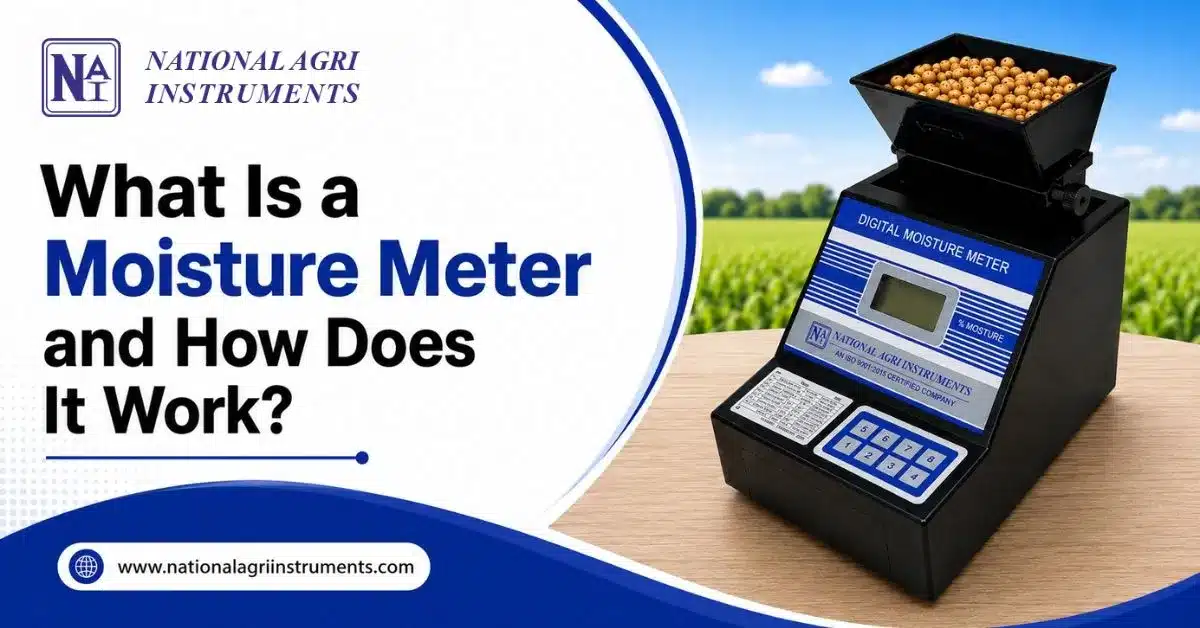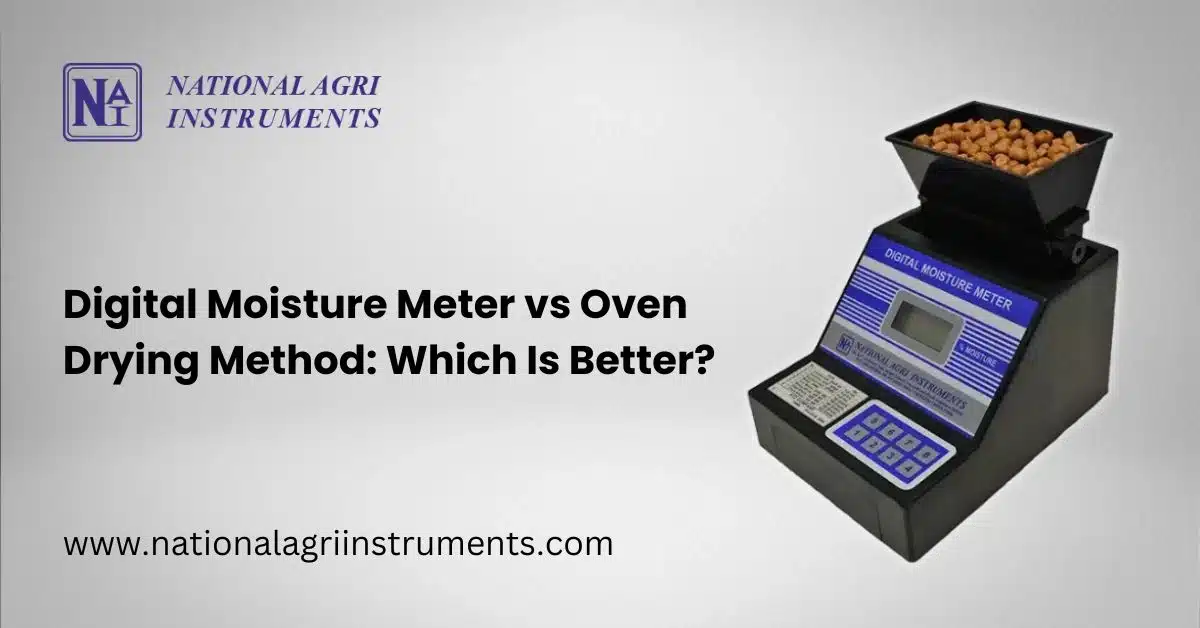
Grain moisture is an important factor in assessing the condition and quality of agricultural samples.…
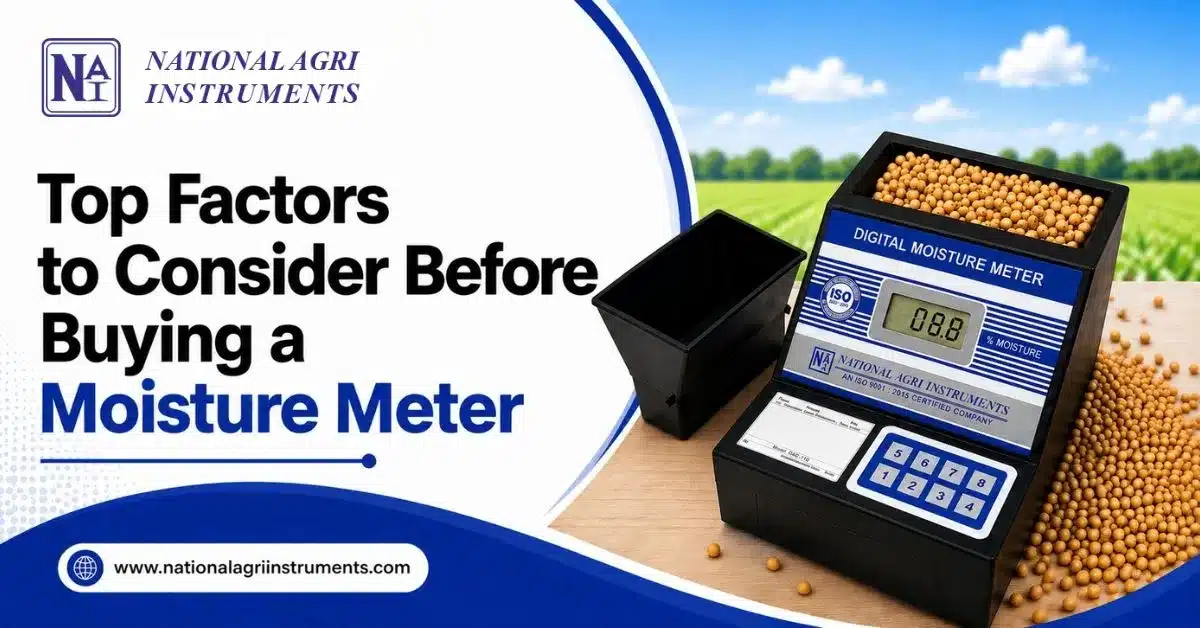
Top Factors to Consider Before Buying a Moisture Meter
Buying a Moisture Meter is an important decision when accurate moisture measurement is part of regular quality testing. Whether you are testing agricultural samples or other materials, the right instrument should match your measurement requirements, testing frequency, and working conditions.
Instead of choosing a device based only on price, compare the features that directly affect moisture content testing and everyday usability.
1. Identify Your Moisture Testing Requirements
Before choosing a Moisture Meter, understand what you need to measure. Sample type, expected moisture levels, testing frequency, and required accuracy can influence the selection.
A suitable moisture testing instrument should support your actual application rather than offering unnecessary features. Identifying these requirements first makes it easier to compare different moisture measurement devices.
2. Check the Moisture Measuring Range
The moisture measuring range is one of the first specifications to review. It indicates the range within which the instrument can measure moisture content.
For example, the National Agri Instruments Moisture Meter has a measuring range of 0.0% to 40.0% moisture. Before purchasing, ensure the specified range is suitable for your samples and intended moisture content measurement requirements.
3. Compare Moisture Meter Accuracy and Sensitivity
Reliable moisture measurement depends on selecting an instrument with specifications appropriate for the application. When comparing options, check both accuracy and sensitivity.
The National Agri Instruments instrument provides ±0.2% accuracy and ±0.1% sensitivity. Reviewing Moisture Meter accuracy helps users understand whether the instrument is suitable for routine sample testing and quality evaluation.
4. Understand the Moisture Measurement Method
Different instruments may use different methods for determining moisture content. Understanding the moisture measurement method can help users select equipment suited to their testing process.
The National Agri Instruments model works on an impedance-type measurement principle. Its internal electronics process the sample and provide a direct reading, eliminating the need for manual calculations or moisture charts. This makes the moisture testing process more straightforward for routine applications.
5. Consider Automatic Temperature Compensation
Temperature conditions can affect the testing environment, which makes automatic temperature compensation an important feature to consider.
A Moisture Meter with temperature compensation automatically adjusts during the measurement process, reducing the need for separate manual calculations. The National Agri Instruments instrument includes automatic built-in temperature compensation for convenient moisture testing.
6. Check Sample Size and Testing Speed
A good moisture testing instrument should fit comfortably into your regular workflow. Check how much sample is required and how long it takes to obtain a reading.
The National Agri Instruments model requires approximately 250 C.C. of sample. The reading starts settling in about 40 seconds after sample pouring, with a measurement rate of one sample per minute. These factors are useful when frequent sample moisture testing is required.
7. Evaluate Ease of Use and Construction
Technical specifications matter, but practical features are equally important when selecting moisture testing equipment. A clear display, durable construction, and simple operation can make regular testing easier.
The instrument features a 3½ LCD display and an ABS molded body designed for rugged use. With no mechanical moving parts and support for non-destructive sample testing, it offers practical features for suitable testing applications.
Looking for a reliable Moisture Meter? Contact Us to find the right solution for your moisture testing requirements.
Quick Tips for Choosing the Right Moisture Meter
Before making a purchase, ask yourself a few practical questions:
- Is the Moisture Meter measuring range suitable for my samples?
- Does the instrument provide the level of accuracy and sensitivity I need?
- Is automatic temperature compensation available?
- How much sample is required for each moisture test?
- Does the measurement time suit my regular testing process?
- Is the moisture testing method suitable for my application?
- Is the instrument easy to operate and maintain?
Answering these questions before purchasing can help you compare different moisture testing instruments and select one that matches your actual requirements.
Frequently Asked Questions
What should I consider before buying a Moisture Meter?
Before buying a Moisture Meter, consider the measuring range, accuracy, sensitivity, measurement principle, temperature compensation, sample size, testing time, and ease of use.
How do I choose the right Moisture Meter?
Choose a Moisture Meter based on your sample type and testing requirements. Compare the moisture measuring range, measurement accuracy, testing method, and practical features before making a decision.
Why is Moisture Meter accuracy important?
Moisture Meter accuracy helps determine how closely the measured value performs within the instrument’s specified accuracy. Reviewing accuracy and sensitivity is important when selecting equipment for routine moisture content testing.
Why is temperature compensation important in moisture testing?
A Moisture Meter with automatic temperature compensation helps simplify moisture measurement by automatically compensating for temperature during the testing process, reducing the need for manual calculations.
What is the moisture measuring range of the National Agri Instruments Moisture Meter?
The National Agri Instruments Moisture Meter has a specified measuring range of 0.0% to 40.0% moisture.
Conclusion
The best Moisture Meter is one that meets your specific testing requirements. Factors such as moisture measuring range, measurement accuracy, testing method, temperature compensation, sample size, and ease of use should all be considered before purchasing.
By comparing these features carefully, you can select suitable moisture testing equipment for accurate moisture measurement and more efficient routine sample evaluation.
Related Posts